


Walk through any grocery store and you will see thousands of products competing for your attention. Bright packaging, health claims, cartoon mascots, irresistible aromas, and carefully designed labels all serve one purpose: to get you to buy and consume more food.
Most people assume hunger is a straightforward biological signal. Your body needs fuel, so you feel hungry. You eat, and the hunger disappears.
Unfortunately, modern food marketing has complicated this relationship.
Today, many people experience hunger that has less to do with the body’s actual nutritional needs and more to do with environmental cues designed to stimulate appetite. As a result, millions struggle with weight gain, obesity, and Type 2 diabetes while believing they simply lack willpower.
The truth is far more complicated.
Human beings evolved in an environment where food was scarce. Sweetness signaled valuable energy. Fat represented survival during times of famine. Our brains developed sophisticated reward systems to encourage us to seek out these foods whenever they became available.
That biology served us well for thousands of years. The problem is that modern food manufacturers understand these biological systems extremely well.
Companies spend billions of dollars researching consumer behavior, flavor preferences, and neurological responses to food. Scientists carefully engineer products to maximize pleasure while minimizing satiety. They study how combinations of sugar, salt, fat, texture, aroma, and appearance influence eating behavior.
The goal is not simply to satisfy hunger. The goal is to encourage continued consumption.
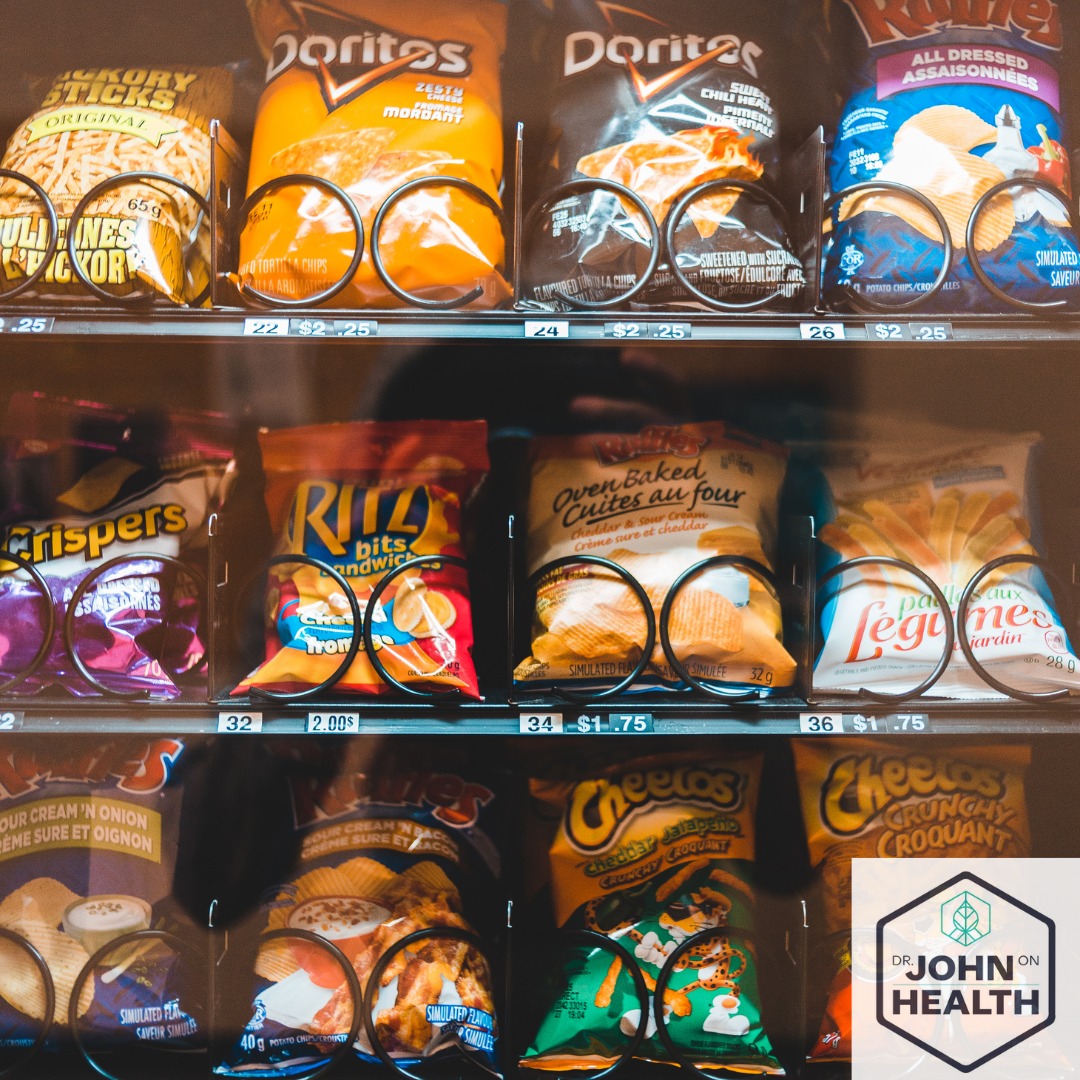
One example is the concept known as the “bliss point.” This refers to the precise balance of ingredients that creates maximum enjoyment without making consumers feel overly full. Products are often designed to keep people reaching for another bite.
Another strategy involves constant exposure.
Food advertisements appear on television, social media, websites, billboards, sporting events, and even schools. Many individuals encounter hundreds of food-related messages every day.
Each message serves as a reminder to eat.Even when the body does not require additional energy.
Research shows that visual food cues can activate reward centers in the brain before a person experiences physical hunger. Simply seeing a commercial for pizza or a photograph of dessert can increase cravings and stimulate appetite.
Food companies understand this. That is why marketing often focuses on emotional experiences rather than nutritional value.

Consumers are encouraged to associate products with happiness, comfort, celebration, friendship, and relaxation. The food becomes more than food. It becomes a psychological experience.
Unfortunately, many of the most heavily marketed foods are highly processed products that provide large amounts of calories with relatively little nutritional value.
These foods digest rapidly, often causing blood sugar fluctuations that can stimulate additional hunger shortly after eating.
As blood sugar rises and falls, many individuals experience renewed cravings and reach for another snack.
The cycle repeats throughout the day.
Consumers often blame themselves for these behaviors. They believe they lack discipline or self-control.
In reality, they are responding to biological mechanisms that evolved for survival and are now being manipulated by sophisticated marketing strategies.
Understanding this distinction is important.
The solution is not greater willpower.
The solution is awareness.
When individuals recognize how food marketing influences their behavior, they can begin making decisions based on their health goals rather than emotional triggers.
This may involve reducing exposure to food advertising, choosing whole foods more frequently, shopping from a grocery list, and learning to distinguish true hunger from conditioned cravings.
The human brain was not designed for today’s food environment. That does not mean people are powerless.
It means they must understand the forces working against them.
The path to better health begins with recognizing that constant hunger is not always a sign that the body needs more food.
Sometimes it is a sign that modern marketing has learned how to speak directly to our ancient biology.
John Poothullil practiced medicine as a pediatrician and allergist for more than 30 years, with 27 of those years in the state of Texas. He received his medical degree from the University of Kerala, India in 1968, after which he did two years of medical residency in Washington, DC and Phoenix, AZ and two years of fellowship, one in Milwaukee, Wisconsin and the other in Ontario, Canada. He began his practice in 1974 and retired in 2008. He holds certifications from the American Board of Pediatrics, The American Board of Allergy & Immunology, and the Canadian Board of Pediatrics.During his medical practice, John became interested in understanding the causes of and interconnections between hunger, satiation, and weight gain. His interest turned into a passion and a multi-decade personal study and research project that led him to read many medical journal articles, medical textbooks, and other scholarly works in biology, biochemistry, physiology, endocrinology, and cellular metabolic functions. This eventually guided Dr. Poothullil to investigate the theory of insulin resistance as it relates to diabetes. Recognizing that this theory was illogical, he spent a few years rethinking the biology behind high blood sugar and finally developed the fatty acid burn switch as the real cause of diabetes.Dr. Poothullil has written articles on hunger and satiation, weight loss, diabetes, and the senses of taste and smell. His articles have been published in medical journals such as Physiology and Behavior, Neuroscience and Biobehavioral Reviews, Journal of Women’s Health, Journal of Applied Research, Nutrition, and Nutritional Neuroscience. His work has been quoted in Woman’s Day, Fitness, Red Book and Woman’s World.Dr. Poothullil resides in Portland, OR and is available for phone and live interviews.To learn more buy the books at: amazon.com/author/drjohnpoothullil
Visit drjohnonhealth.com to learn more. You can also contact him at john@drhohnonhealth.com.
Or follow us on:
Instagram: instagram.com/DrJohnOnHealth
Facebook: facebook.com/JohnOnHealth
Youtube : @DrJohnPoothullil
For more great lifestyle content, see here.
Explore more insights at https://usadailypost.com/