
Commentary ON THE PRICE OF BUSINESS SHOW, MEDIA PARTNER OF THIS SITE.
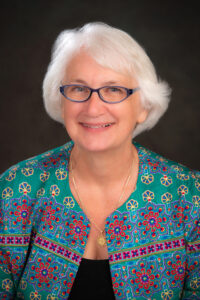
Recently, Denise Billen-Mejia spoke on the Price of Business.
The Denise Billen-Mejia Commentaries
There is a letter on somebody’s kitchen counter right now, reminding them they are due for a check-up. It has been there a fortnight. They mean to ring tomorrow, when things are calmer. Tomorrow is not calmer, and the letter moves to the pile by the fruit bowl. Six months. Then a year. Then more than a decade.
This month: the appointments we put off. The dentist, the blood test, the scan, the operation we keep meaning to schedule. Most people who avoid them are not phobic. They are frightened, and that is not a malfunction but a nervous system doing what it evolved to do.
Behind a dental fear there is nearly always one specific afternoon, and in the memory the person is seven years old. The event lasted ninety seconds. What it taught them has lasted forty years, and telling yourself not to be ridiculous has never once worked, because the fear arrives before any thought does.
Needles are their own case. Many who dread blood tests do not simply feel anxious; they faint, or come close to it, because with blood and needles a proportion of people do the opposite of speeding up. The blood pressure drops and the world goes grey at the edges. Which is why “just relax” points in the wrong direction entirely.
The scanner is the one most often misunderstood. Newer machines are wider than people picture, so the old joke about the tube no longer holds. But you are still asked to lie still for twenty minutes or more while it makes a noise like roadworks, and for scans of the head or neck you may be fitted with a mask, rather like a fencer’s, clamped over the face.
So the distress is rarely about the space. It is about not being able to move, and not being able to stop it. What helps is having somewhere else to be — and there, for once, the popular picture of hypnosis is not far off. A mammogram involves no confinement at all, though I have yet to meet the woman who is happy to be there.
Then surgery, where the gap is widest. Planned surgery comes with a waiting period built in, and nobody prepares you for what it does. The date is set, five weeks away, then three, then nine days. You are told what to stop taking and when to stop eating. What you are rarely offered is anything for the part keeping you awake at four in the morning.
Someone who arrives having slept badly for three weeks is not in the same state as someone who arrives settled. In a randomised trial published in 2007, two hundred women having breast surgery were given either a fifteen-minute hypnosis session beforehand or the same time in warm conversation. The hypnosis group needed less anaesthetic during the operation, and afterwards reported less pain, nausea and distress.
Emergency surgery is where a good many of these fears are made, because it has no waiting period at all: things are done quickly, with little explanation, while you are frightened and in pain. But some people find, years later, that they cannot walk into a hospital without their chest tightening, and are bewildered by it, because the surgery worked and they were grateful. That is not ingratitude. It is a lesson learned in an afternoon rather than in childhood; the shape is the same either way.
What happens in a hypnosis session is less mysterious than people expect. We go back to where the lesson was learned, and the seven-year-old’s verdict is looked at by the adult — who knows dentistry has changed beyond recognition, and that they may raise a hand and have everything stop. The nervous system is not argued with. It is given new information, in the one state where it is receptive to it. Most people need fewer sessions than they expect; some manage in two.
It matters because it is not really about the discomfort of an appointment. People do not skip a blood test in isolation. They skip the test, so the medication is not monitored and the dose is not adjusted. Or it was the test that would have caught something early, and it is caught late instead, when the options are fewer. And a patient who cannot be tested cannot really be followed: every decision the doctor makes rests on less than it should.
The fear is a small thing. What it prevents is not.
Dr. Denise Billen-Mejia is a former emergency medicine physician turned clinical hypnotist, dedicated to helping people find relief that conventional medicine alone hasn’t been able to provide.
To explore further, find articles and resources, or get in touch with Denise directl email office@aahypnosis.com or visit her website: healandberadiant.com
Check out more lifestyle stories here.
Explore more insights at https://usadailypost.com/.